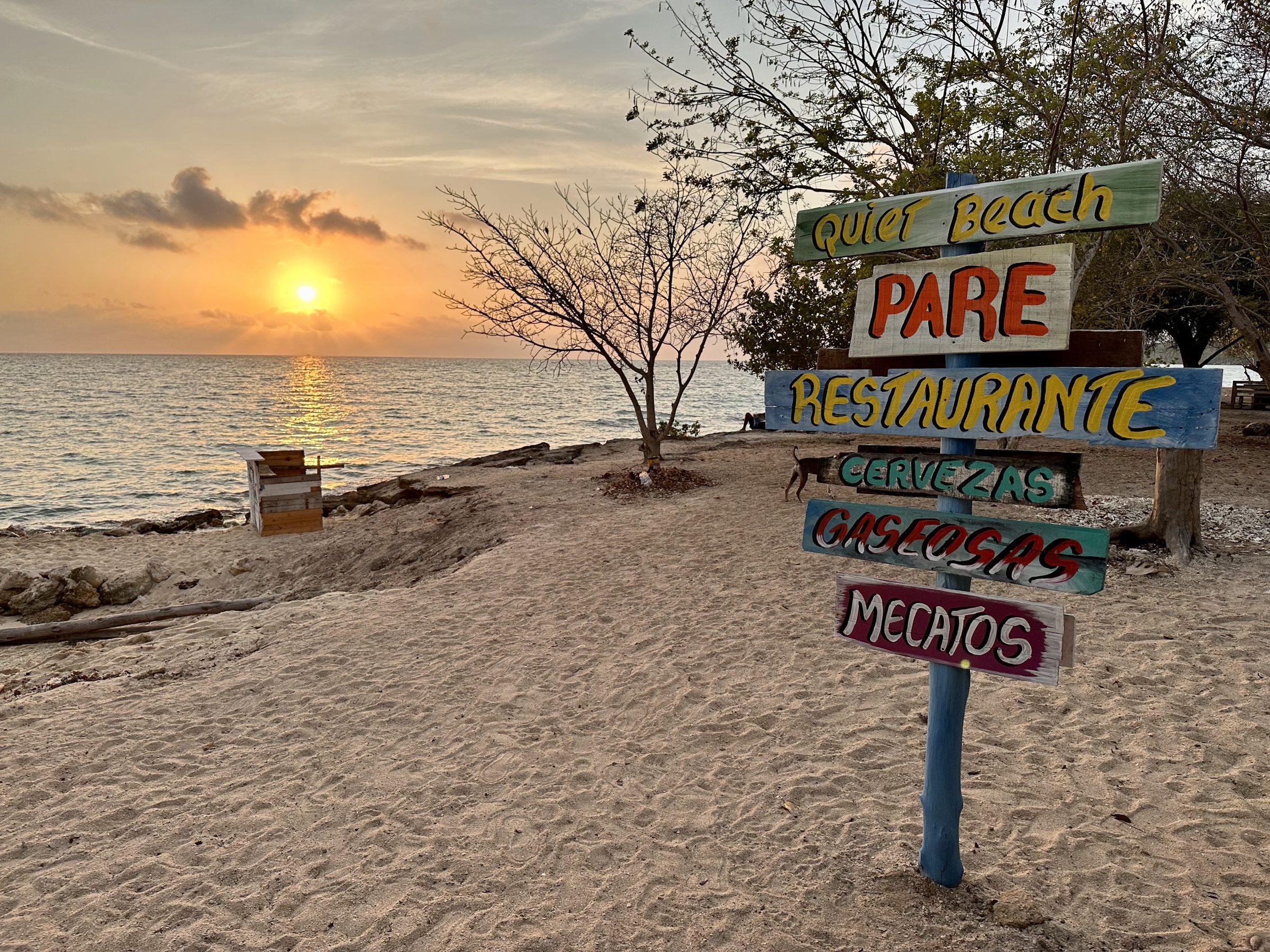
The question at the birthday table
You are at a birthday party, glass in hand, mentioning a trip you just booked. Someone across the table tilts their head: "Flying, though? Isn't travel terrible for the planet?"
Most people mumble something polite and change the subject. Next time, don't. That sentence is half true, and the other half is where you actually have a say.
Start with the part that stings
The flight is real. A 2024 study in Nature Communications puts tourism at 8.8% of global greenhouse gas emissions, and the authors point to flying as the biggest single piece of it.
So the person at the party has a point. It is a point about the airplane. It says almost nothing about the two weeks after you land.
Your holiday is someone's working week
The man who has your sunbed out before you are even awake. The boat owner who knows which bay is calm today. The cook whose stew is the reason you go back three nights in a row. Your holiday is their working week.
Every coffee, every boat trip, every dinner pays someone. The catch is that not all of it stays in town. Sri Lanka measured it: of the 3.17 billion US dollars tourism brought in during 2024, roughly 1 billion a year leaks away to suppliers and companies elsewhere.
So the real question is simple. How much of your trip ends up with them?
People protect what they live from
This is where the local economy and the planet meet.
Researchers asked 401 people living around a natural park on the border of Spain and Portugal how they felt about tourism. Those who felt it brought them something were more likely to back a more sustainable way of doing it.
That makes sense when you think about it. If the reef, the forest or the quiet beach pays your rent, you look after it. If tourists only bring crowds and the money flows elsewhere, why would you?
Order the dish you can barely read
Dinner, day three. You are tired. The hotel has a club sandwich and a pasta. Two streets back, a family place has a handwritten board you can only half read.
Go with the board. The money goes to the owner, the cook, and often a farmer down the road, instead of an importer far away. And honestly, it is usually the meal you remember.
Back to the birthday table
So next time someone tells you travel is bad for the planet, agree with the first half. The flight has a cost, and nothing you eat on holiday cancels it. Then tell them about the second half. A place where locals do well from visitors is a place with people who have every reason to keep it beautiful.
U-GO reads your raw instinct and gives you three places where you belong. What you do there is up to you. Why sustainability stays out of the swipe itself is a story for another blog: Sustainability is not something you can swipe.
Then ask them which part of the trip they meant.
People also ask
Is travel bad for the environment?
Partly. A 2024 study in Nature Communications puts tourism at 8.8% of global greenhouse gas emissions, with flying as the biggest single piece. That is the flight. Once you land, where you spend your money decides how much of your trip supports the people who live there.
Why is supporting the local economy good for sustainability?
People protect what they live from. A 2024 study around a natural park on the border of Spain and Portugal found that residents who feel tourism brings them something are more likely to back a more sustainable way of doing it.
Why eat at local restaurants when you travel?
Because the money goes to the owner, the cook and often a farmer nearby, instead of an importer far away. A place where locals do well from visitors is a place with people who have every reason to keep it beautiful.